Vehicle Detection with YOLOv11
A real-time vehicle detection and classification system using YOLOv11 trained on a custom dataset (Cars, Buses, Ambulances, Motorcycles, Trucks). Achieved 87% mAP and 89% precision on test set.
The Problem
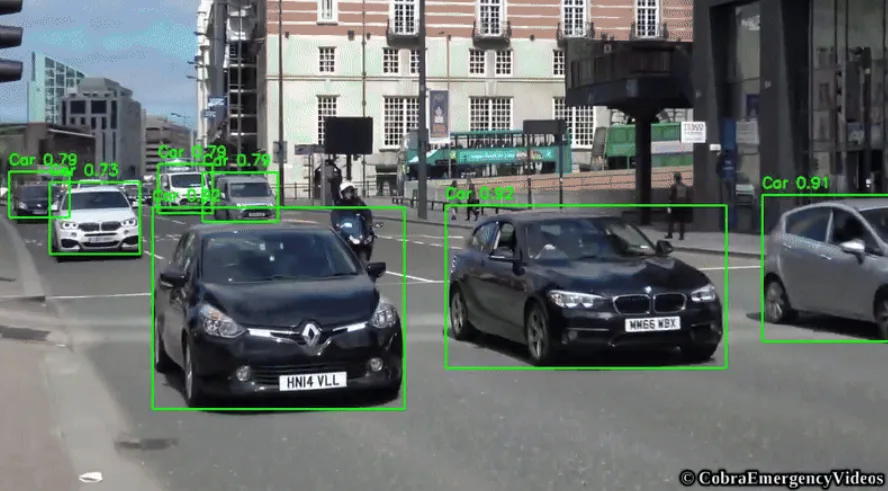
Traffic monitoring and smart transportation systems require accurate and real-time vehicle detection. Traditional methods are often limited by environmental conditions and processing speed. This project aims to build an accurate, efficient, and scalable vehicle detection model using the YOLOv11 architecture for various vehicle types.
The Solution
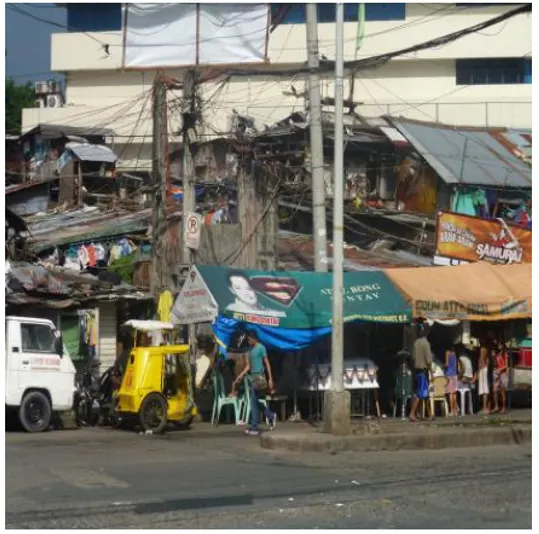
A custom YOLOv11 model was trained to detect and classify vehicles such as cars, buses, ambulances, motorcycles, and trucks using the Kaggle Vehicle Detection dataset by Alkan Erturan. The system leverages YOLOv11's anchor-free structure and advanced optimization techniques to achieve high accuracy in real-time inference. Trained for 100 epochs using AdamW optimizer and 640×640 input size, it outperformed YOLOv8n by +4% mAP improvement.
Dataset Collection & Labeling
Used Alkan Erturan's Kaggle dataset containing annotated vehicle images in YOLOv8 format. Adapted dataset for YOLOv11 and structured into train, validation, and test splits.
Model Training
Trained YOLOv11n (nano) for 100 epochs on Google Colab (Tesla T4 GPU) using AdamW optimizer and batch size 16. Implemented OneCycleLR for dynamic learning rate adjustment.
Performance Evaluation
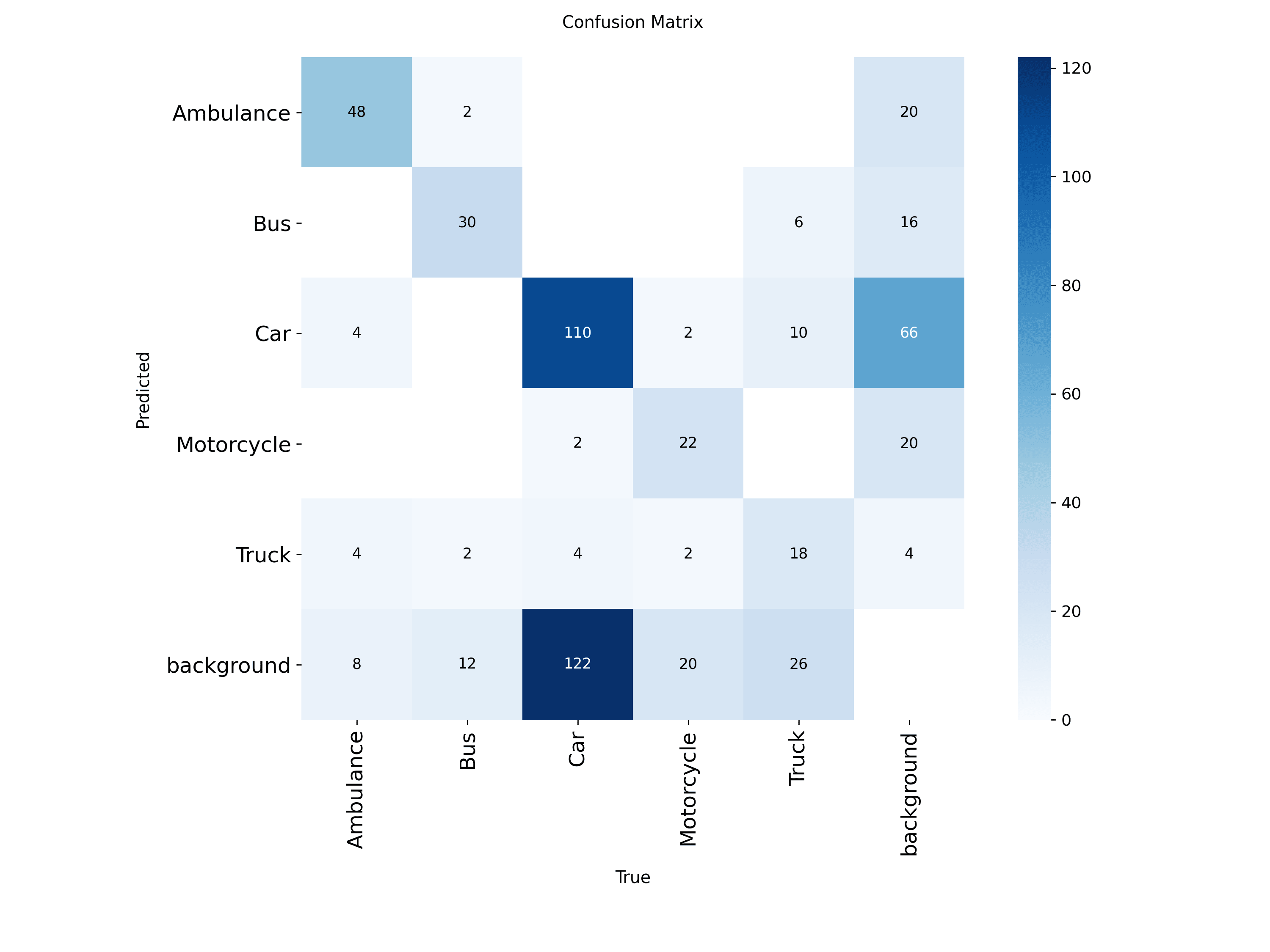
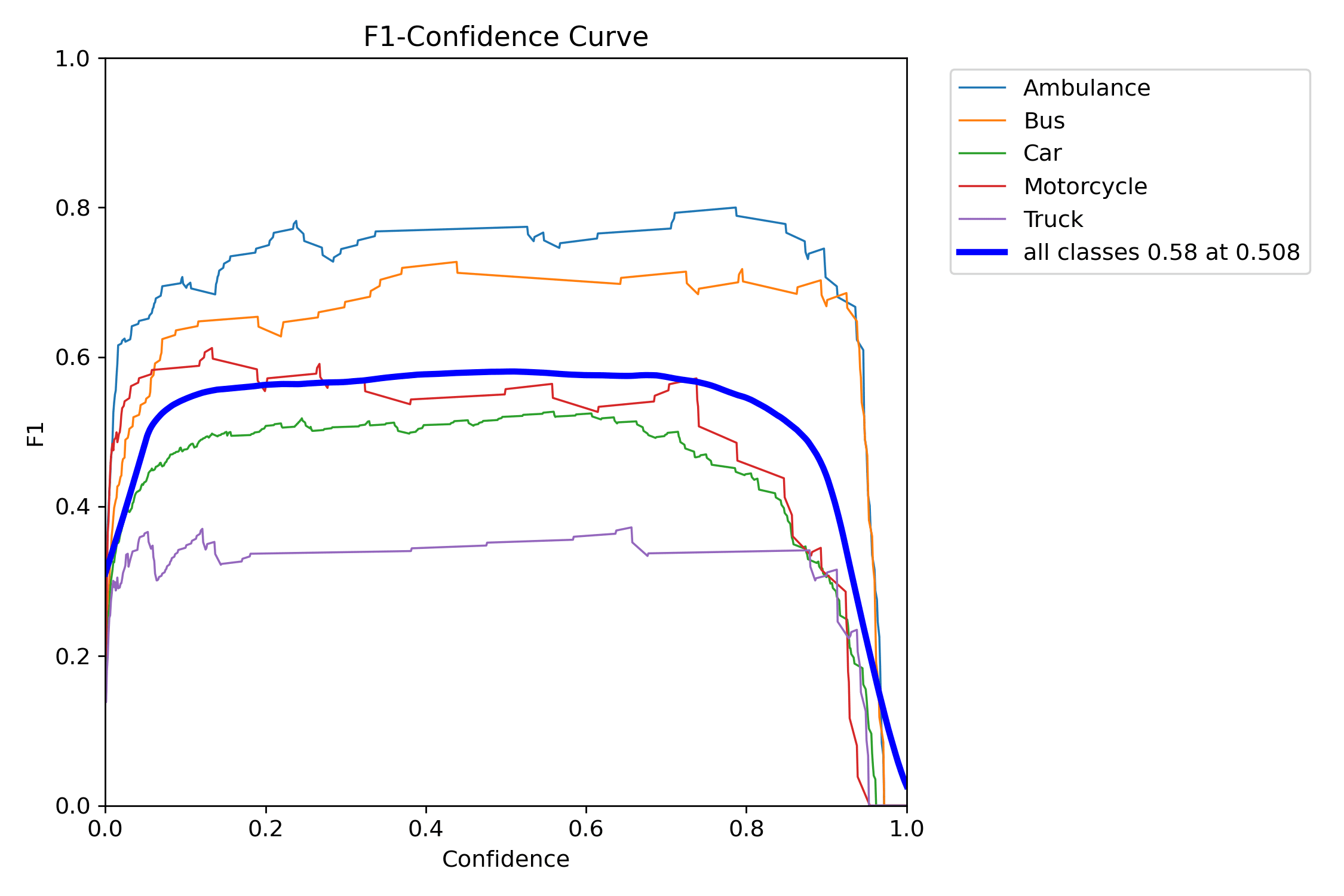
Compared YOLOv11n vs YOLOv8n models. YOLOv11 achieved 87% mAP50, 89% precision, and 85% recall. Results validated via confusion matrices and performance curves.
Architecture
YOLOv11-based vehicle detection system trained on 5 vehicle classes with enhanced accuracy and generalization using PyTorch and Ultralytics.
- YOLOv11n model (nano) with CSPDarkNet backbone
- Anchor-free detection and decoupled head for multi-class recognition
- Loss: Objectness + Classification + Bounding Box regression
- Optimizer: AdamW with OneCycleLR scheduler
- Input size: 640×640 pixels
Dataset
Source: Kaggle – Vehicle Detection Dataset by Alkan Erturan
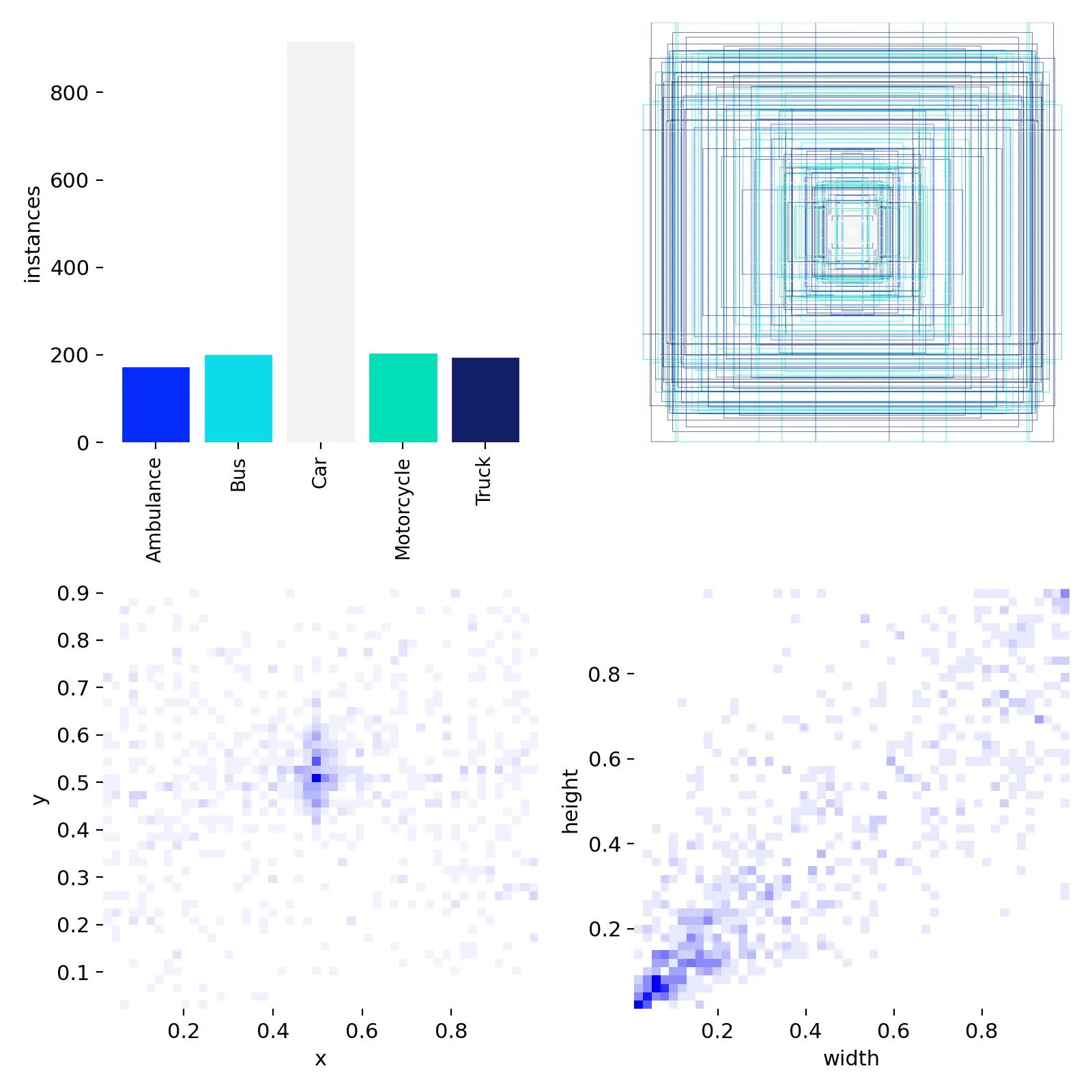
- Train set: annotated vehicle images (Cars, Buses, Ambulances, Motorcycles, Trucks)
- Validation set for performance evaluation
- Test set includes both images and a traffic video clip
Total: ~10,000+ annotated images + 1 evaluation video
Split: 70% training / 20% validation / 10% testing
Image Size: 640×640 pixels
Training Details
- epochs: 100
- batchSize: 16
- optimizer: AdamW
- learningRate: Dynamic (OneCycleLR)
- lossFunction: Objectness + Classification + Box regression
- framework: PyTorch (Ultralytics YOLOv11)
- hardware: Google Colab (Tesla T4 GPU)
Results & Analysis
Metrics:
- YOLOv8n: mAP50: 83% | Precision: 86% | Recall: 81%
- YOLOv11n: mAP50: 87% | Precision: 89% | Recall: 85%
Observations:
- YOLOv11n achieved +4% mAP improvement over YOLOv8n.
- Excellent precision and recall balance suitable for traffic monitoring.
- Model performed reliably across varying lighting and vehicle types.
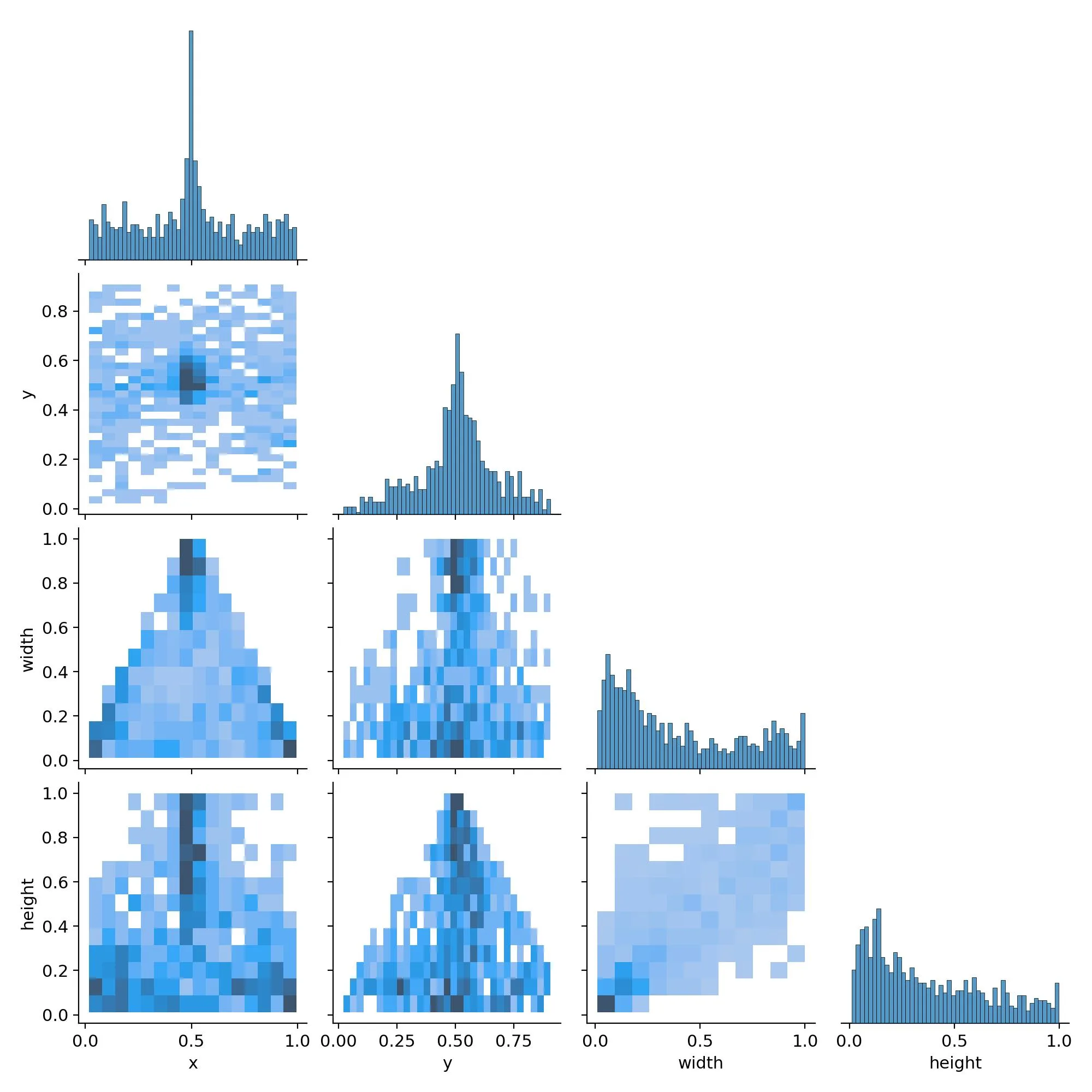
- Visualization outputs confirm accurate bounding box placement.
Future Improvements
- Fine-tune larger YOLOv11 models (yolo11s.pt, yolo11m.pt).
- Expand dataset to include nighttime and weather variations.
- Deploy model on embedded systems like Jetson Nano and Coral TPU.
- Integrate object tracking (DeepSORT, ByteTrack) for vehicle movement analysis.
- Develop a real-time traffic analysis dashboard using OpenCV.
Technologies Used
Project Gallery